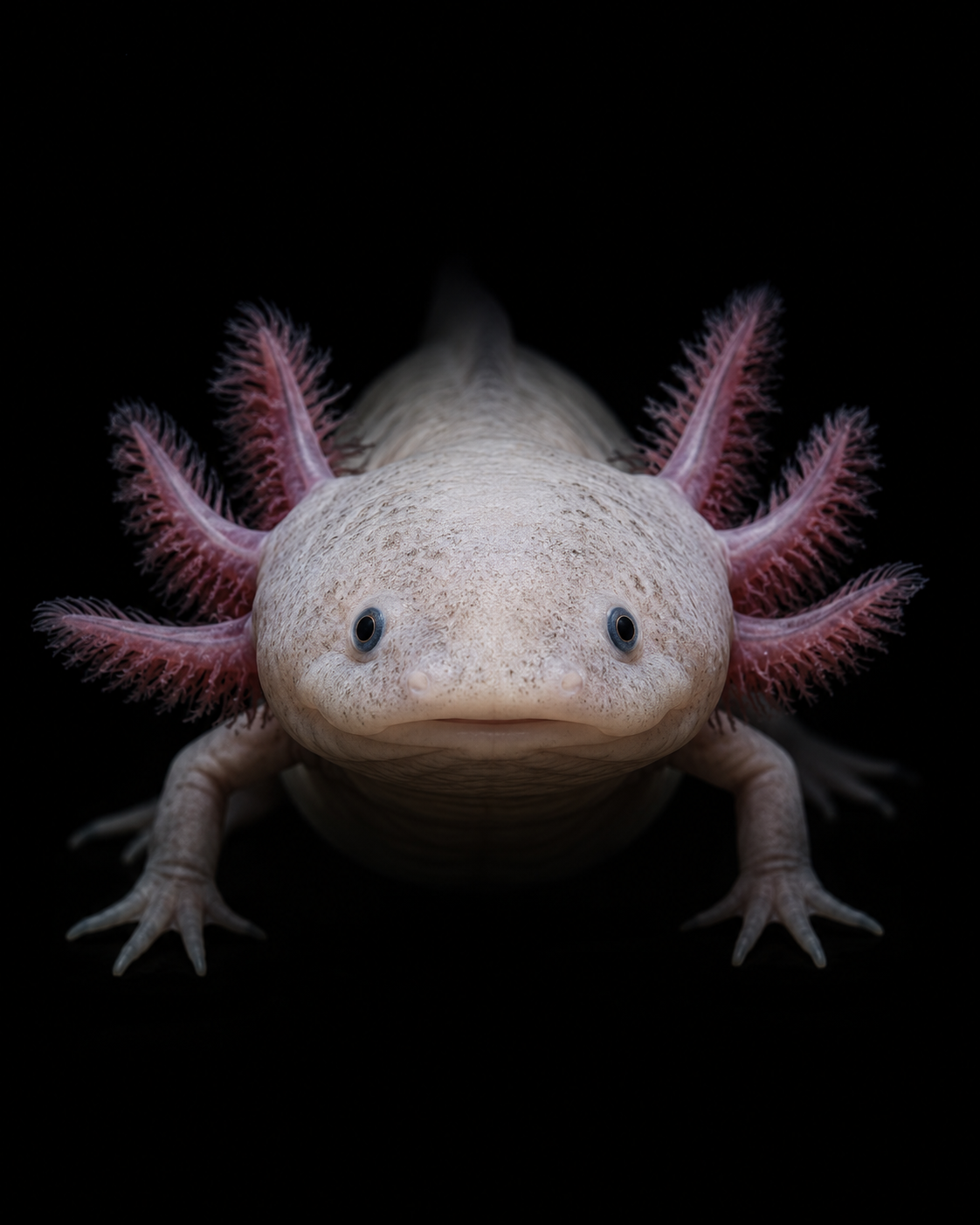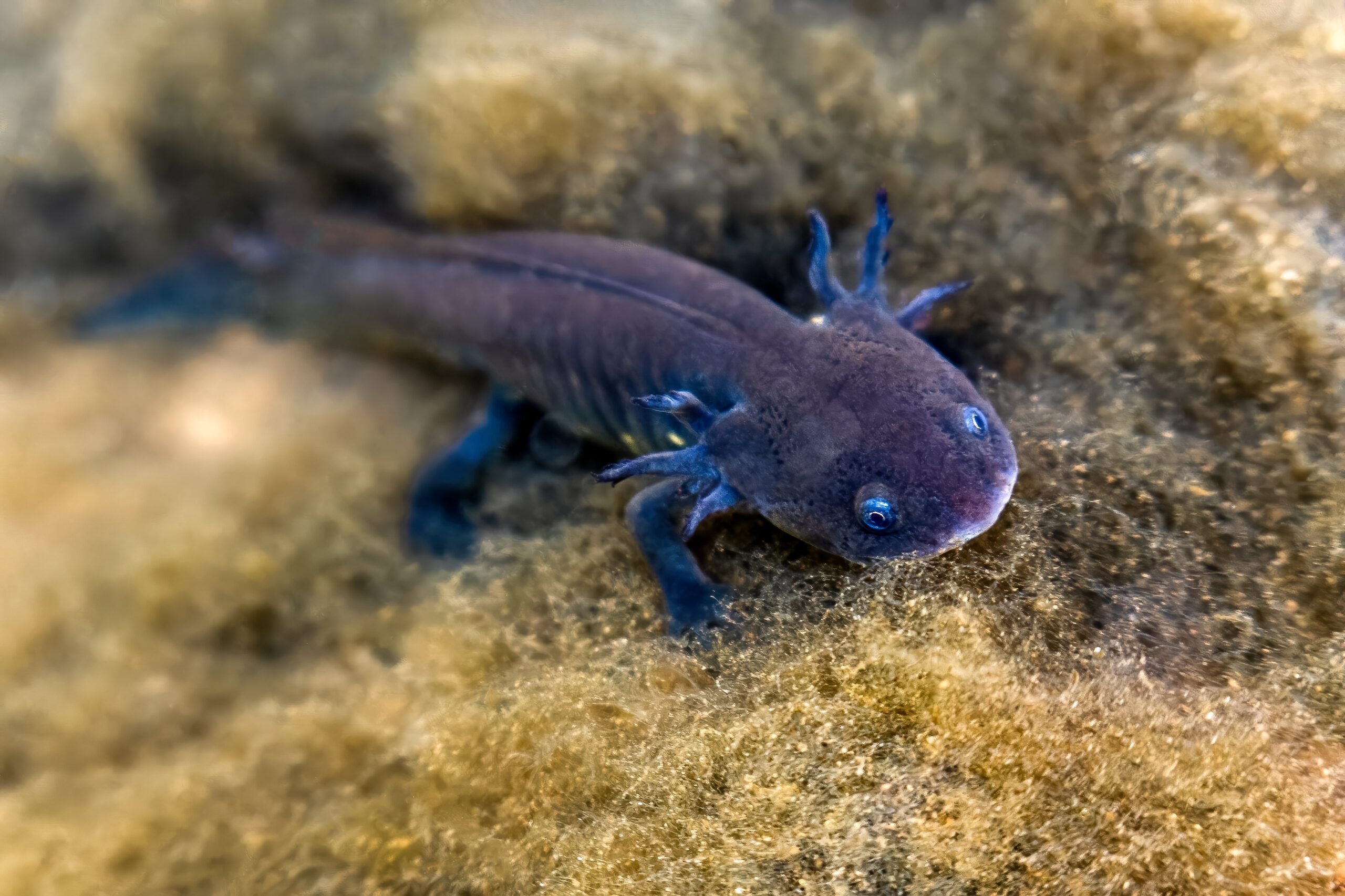






Axolotls, often referred to as "Mexican walking fish," are captivating creatures that have captured the hearts of many. These aquatic salamanders possess unique characteristics and remarkable abilities that set them apart from other amphibians. In this blog post, we'll delve into five fascinating facts about axolotls.
01. Axolotls can regenerate everything
One of the most astonishing aspects of axolotls is their extraordinary ability to regenerate lost body parts. Unlike most animals, axolotls can regrow limbs, tails, and even parts of their hearts. This regenerative power is unlike anything seen in most other vertebrates. In fact, scientists have compared their regenerative abilities to those of starfish, which are known for their remarkable ability to regrow entire limbs.
The process of axolotl regeneration is complex and involves a series of biological steps. When an axolotl loses a limb, a specialized tissue called blastema forms at the wound site. This blastema is composed of stem cells that can differentiate into various cell types, allowing the limb to be rebuilt. Scientists are particularly interested in studying axolotl regeneration because it could provide insights into developing new treatments for human injuries and diseases.
02. axolotl: A Lifelong Juvenile
Unlike many amphibians that undergo metamorphosis, axolotls retain their juvenile features throughout their entire lives. This phenomenon, known as neoteny, means that axolotls continue to have gills, a larval-like appearance, and an aquatic lifestyle even as adults. This adaptation allows them to thrive in the oxygen-poor waters of their native Mexican lakes. Neoteny is a rare trait among amphibians and contributes to the unique nature of axolotls.
One of the reasons for axolotls' neoteny is their thyroid gland. In most amphibians, the thyroid gland produces hormones that trigger metamorphosis. However, in axolotls, the thyroid gland is less active, preventing them from undergoing this transformation. This allows them to maintain their juvenile features and adapt to their aquatic environment.